Introduction
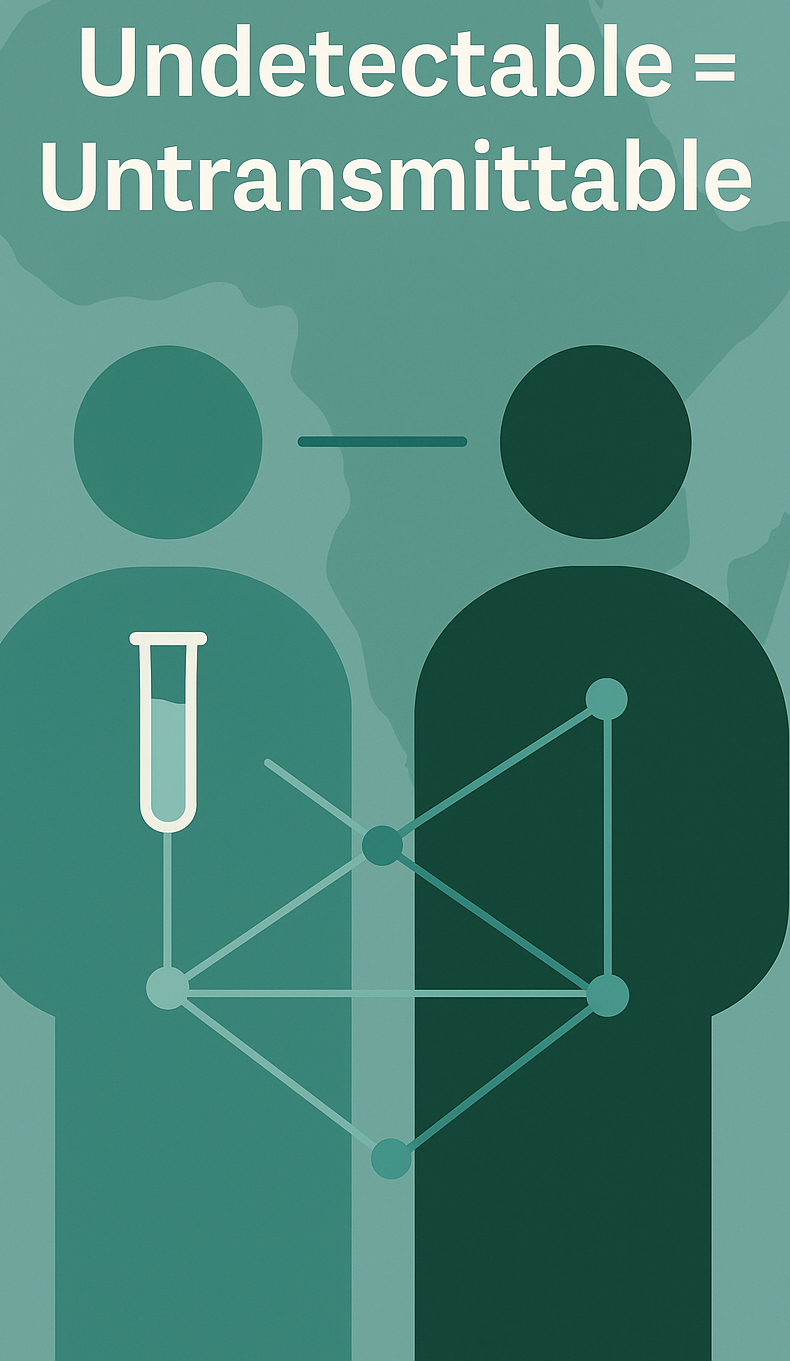
U=U is a clinical reality: a person living with HIV who has an undetectable viral load does not transmit the virus. But without reliable longitudinal monitoring, this scientific equation has no collective effect. In many countries in Africa and the MENA region, the fragmentation of HIV information systems prevents U=U from becoming operational. Translating this principle into a public health lever requires digital infrastructures to monitor, aggregate, and manage
U=U: progress hampered by a lack of consolidated data
U=U is based on a now indisputable scientific reality: an HIV-positive person with an undetectable viral load does not transmit HIV. But for such progress to have a collective impact, it must be supported by systems that measure, monitor, and document it over time. Without aggregated data, the epidemiological, social, and political impact of U=U is invisible.
When it is applied systematically, it reduces community transmission, increases retention in care, reduces institutional stigma, and changes the caregiver-patient relationship. U=U also makes it possible to advocate for decriminalization, health insurance, and access to parenthood, based on proven long-term HIV viral suppression.
To generate these impacts, U=U must be an integrated approach, supported by a strong HIV information system. It is not enough to simply convey a message. It is necessary to ensure regular access to viral load testing, rapid turnaround of results, secure longitudinal follow-up, and interoperability between clinical services, laboratories, and community actors.
In many countries in Africa and the MENA region, this technical architecture is incomplete. Institutional fragmentation, dependence on paper, exclusion of data from key populations, and the lack of electronic patient records compromise the continuum of care.
U=U is not an inspiring slogan. It is a data-driven public health tool. Where digital infrastructure is lacking, the undetectable = untransmittable principle remains an empty promise, with no concrete impact on collective trajectories.
Systemic fragmentation: blind spots in longitudinal monitoring
In many sub-Saharan African countries and certain MENA contexts, HIV information systems remain fragmented between national entities, community structures, laboratories, and international partners. This fragmentation hinders the tracking of patient journeys and weakens the continuum of care.
The lack of interoperability between digital systems, compounded by a reliance on paper, hinders data flow. Without a digital health system to connect levels of care, decentralized viral load testing remains a technological dream.
Data generated by services for key populations (MSM, SW, IDUs, transgender people, migrants) are rarely integrated into national databases. This absence creates considerable epidemiological blind spots. Longitudinal monitoring becomes incomplete and sometimes impossible to interpret.
HIV laboratory information systems often operate in silos. Test results are lost or arrive weeks later. National consolidation is retrospective, with no feedback loop for improvement. The evaluation of HIV programs is biased, and the 95-95-95 cascade targets cannot be measured accurately.
This division is not a technical weakness. It has real consequences: undetected rebounds, unquantified loss to follow-up, and inability to manage retention. Each break in information transmission negates part of the effect of U=U.
Regional heterogeneity should be interpreted, not ignored
Sub-Saharan Africa and the MENA region are not two uniform blocs. Health situations, digital maturity, laboratory capacities, and political will vary greatly. But structural trends cut across both regions.
Several countries still have overly centralized testing, frequent logistical delays, partial digitization, and poorly documented retention of patients living with HIV. The lack of electronic patient records makes it impossible to monitor patients over time, particularly when there are interruptions in care.
Documentation remains uneven. Sub-Saharan Africa generates more operational analyses and indicator reviews. In the MENA region, data is scarcer, but the concerns raised (inequalities in access to viral load testing, interruptions in follow-up, compartmentalization of actors) reflect similar dynamics.
It would be wrong to generalize. But ignoring these common patterns would render any strategy ineffective. The challenges of viral load monitoring in African health systems, like those in the MENA region, deserve a contextualized reading, supported by available data.
Tunisia: stated commitment, systemic obstacles
Tunisia has adopted U=U in its National Strategic Plan to Combat HIV. However, the lack of an integrated data system makes it impossible to verify this commitment in practice.
No individual longitudinal monitoring system has yet been put in place. People living with HIV (PLHIV) do not have a single file to monitor viral suppression over time. Losses to follow-up are invisible. Rebounds are not taken into account. Undetectability cannot be proven over time.
The national capacity for monitoring viral load remains weak. Testing is centralized in Tunis, reagent shortages are frequent, and turnaround times are too long for a responsive clinical response. Decentralized viral load testing is not yet available.
Data generated by community NGOs is not always integrated into the national system. The Global Fund system, the laboratory system, the hospital system, and the association system all run on different platforms that are not interoperable.
Tunisia is an example of a common paradox: strong political will but weak information infrastructure. This gap prevents U=U from being a truly effective management tool.
Confusion: suppression is not a cure
In some African contexts, studies have reported persistent confusion between undetectable viral load and cure. This misunderstanding undermines adherence, compromises message clarity, and hinders the adoption of U=U.
The MENA region has been less studied in this regard, but recent reports also highlight a poor understanding of HIV viral suppression mechanisms. This confusion reduces the effectiveness of therapeutic education programs and weakens retention strategies.
International organizations are clear: undetectable does not mean cured. The WHO, UNAIDS, and CDC reiterate this in their official guidelines. But to be heard, it must be translated into appropriate clinical communication.
There is a direct link between understanding and therapeutic engagement. If patients believe they are cured, they abandon follow-up care. If healthcare providers do not explain, they perpetuate ambiguity. A well-designed HIV information system can also be transformed into a tool for organized education.
U=U in action: 5 structural changes
Transforming the U=U principle into an operational lever requires five concrete transformations:
1- Make viral load testing accessible, regular, and decentralized: Without regular testing, suppression is a gamble. We need to focus on bedside platforms that provide results that can be used quickly.
2- Establish an integrated and interoperable information system: Longitudinal monitoring is the essence of U=U. Each siloed entity undermines continuity of care and program governance.
3- Integrate community data and key populations: Without these figures, the epidemic is invisible. Their participation legitimizes and makes interventions more effective.
4- Ensure consistent clinical communication: The terms "undetectable," "viral suppression," and "viral load" must be explained at every stage of the care pathway.
5- Govern the HIV response with evidence: Investing in data is not a luxury. It is a prerequisite for a credible and sustainable response.
Conclusion
U=U can change the response to HIV, but without a system to prove, track, and stabilize viral suppression, it is a technical and moral ideal with no structural impact. In many countries in Africa and the MENA region, weaknesses in HIV information systems prevent this advance from being translated into results.
Investing in data enables reliable longitudinal monitoring, the involvement of key populations in steering, and steering based on real data. It means recognizing that viral suppression is a right, not a favor.
U=U only has an effect if it is measurable. And it is only measurable if health systems are organized for this purpose. Until this consistency is guaranteed, the promise will remain incomplete. Making U=U a reality means investing in the invisible infrastructure that brings together rights, science, and dignity.
References
World Health Organization. (2021). Consolidated guidelines on HIV prevention, testing, treatment, service delivery and monitoring.
https://www.who.int/publications/i/item/9789240031593
World Health Organization. (2019). Considerations for developing a monitoring and evaluation framework for viral load testing. https://www.who.int/publications/i/item/WHO-CDS-HIV-19.5.
UNAIDS. (2024). Undetectable = Untransmittable: Public health and HIV transmission guidance. https://www.unaids.org/sites/default/files/media_asset/undetectable-untransmittable_en.pdf
UNAIDS. (2021). Global AIDS Strategy 2021–2026: End Inequalities. End AIDS. https://www.unaids.org/en/global-aids-strategy-2021-2026
UNAIDS. (2023). UNAIDS Data 2023. https://www.unaids.org/en/resources/documents/2023/2023_unaids_data
CDC. (2024). HIV Treatment as prevention.
https://www.cdc.gov/hivpartners/php/hiv-treatment/index.html
MENAHRA. (2024).Assessment of situation and response of drug use and its harms in the Middle East and North Africa 2024. https://www.menahra.org/wp-content/uploads/2025/05/Assessment-2024.pdf
Steven Meanley et al. (2020). Awareness and perceived accuracy of Undetectable = Untransmittable: A cross-sectional analysis with implications for treatment as prevention among young men who have sex with men. https://pmc.ncbi.nlm.nih.gov/articles/PMC6814205/
PNLS Tunisia/IQVIA. (2023). Analysis of the HIV information system in Tunisia.
PNLS Tunisia/UNAIDS Tunisia. (2023). Quick review of the National HIV Strategic Plan 2021–2025
Member discussion: